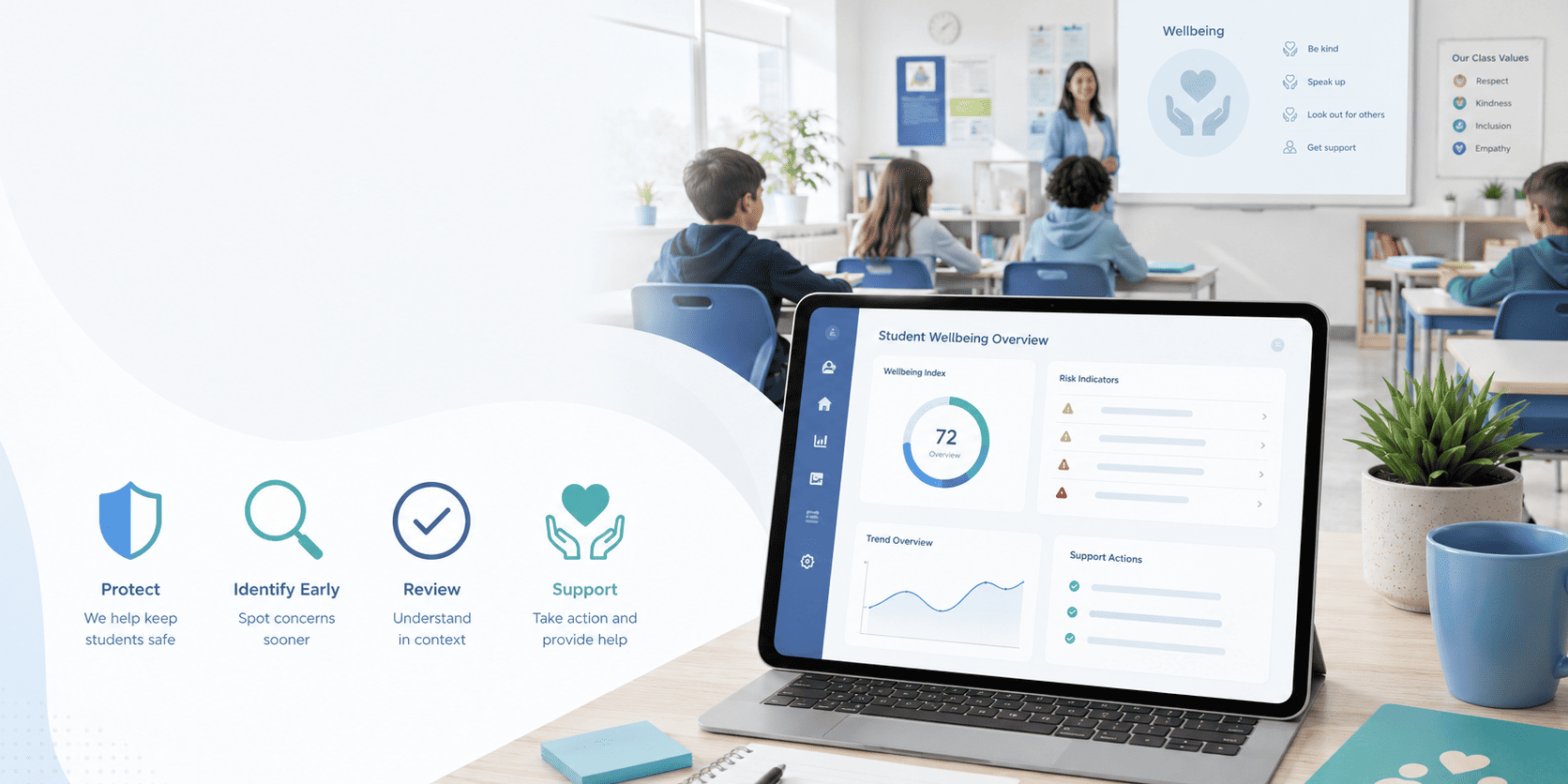
Online Risk Signals in Schools: What Technology Can Help Detect Before It Becomes a Crisis
Schools are responsible for much more than delivering lessons. They are also places where students should feel safe, supported and seen. As more learning, communication and social interaction happens online, this responsibility increasingly extends into digital spaces too.
Students use school devices, online platforms, search engines, messaging tools, learning portals and cloud applications as part of their everyday education. Most of this activity is normal and positive. But sometimes, online behaviour may include signs that a student is struggling, being targeted, exposed to harmful content or involved in a risky situation. The challenge for schools is not only responding when something serious happens. It is noticing concerns early enough to provide support.
What are online risk signals?
Online risk signals are digital indicators that may suggest a potential safeguarding concern. These could include searches related to self-harm, violence, bullying, abuse, eating disorders, exploitation, dangerous challenges or other harmful topics. They may also include concerning words or phrases typed into documents, chats or web searches. It is important to be careful here.
A single search or phrase does not automatically mean a student is in danger. Context matters. Students may search for sensitive topics because of curiosity, schoolwork, personal concern or because they are worried about someone else. That is why technology should not be used to jump to conclusions. It should be used to help responsible adults notice patterns, review context and decide whether support may be needed.
Why early visibility matters
In many cases, students do not directly ask for help. They may feel embarrassed, afraid, confused or unsure who to speak to. Sometimes the first visible signs of distress or risk appear indirectly — through behaviour, language, searches or online activity. When schools have no visibility into these signals, concerns may only become known after the situation has escalated. By then, support may be more urgent and more difficult.
Early visibility can help safeguarding teams act sooner. This might mean checking in with a student, speaking with a teacher, reviewing the wider context or following the school’s safeguarding process. The goal is not to punish students for what they type or search. The goal is to identify when someone may need help.
What happens after a signal is identified?
An online risk signal should not be treated as an automatic conclusion. It should be treated as a reason to look closer. A responsible response usually starts with reviewing the context: what was typed or searched, where it happened, whether it appears to be a one-off action or part of a wider pattern, and whether there are any existing concerns about the student. From there, the school can decide the right next step. This may be a quiet check-in with the student, a conversation with a teacher, involvement from the safeguarding lead, or following the school’s existing safeguarding procedure.
The value of technology is not that it makes the decision.
The value is that it helps the right people see potential concerns earlier, so they can respond with care and judgement. Technology supports people — it does not replace them Safeguarding is a human responsibility. Technology can help by highlighting potential concerns, reducing manual monitoring and making it easier for schools to spot risks across digital environments. But it cannot understand a child’s full situation on its own. Teachers, safeguarding leads, counsellors and school staff bring the judgement, empathy and context that technology cannot provide.
This balance matters. A good safeguarding approach should combine digital visibility with clear processes, trained staff and thoughtful decision-making. Alerts should be reviewed carefully. Responses should be proportionate. Students should be treated with care, not suspicion.
Creating safer digital learning environments
Online safety is not only about blocking harmful content. Blocking can be useful, but it is not enough on its own. Schools also need to understand what students may be exposed to, how they are using digital tools and where risks may be emerging. This visibility can support better conversations, more informed policies and earlier interventions.
It can also help schools protect students while still allowing them to benefit from technology. After all, digital learning is now part of modern education. The answer is not to remove access, but to make that access safer and better supported.
A more proactive approach to student wellbeing
Every school wants to protect its students. The difficulty is that warning signs are not always obvious. Online risk signals can offer an additional layer of awareness. They can help schools move from reacting to serious incidents toward identifying concerns earlier and responding with care. Used responsibly, technology can give safeguarding teams more confidence, better visibility and more time to act.
Because when a student may be struggling, even an early signal can matter.
And sometimes, noticing sooner can make all the difference.