
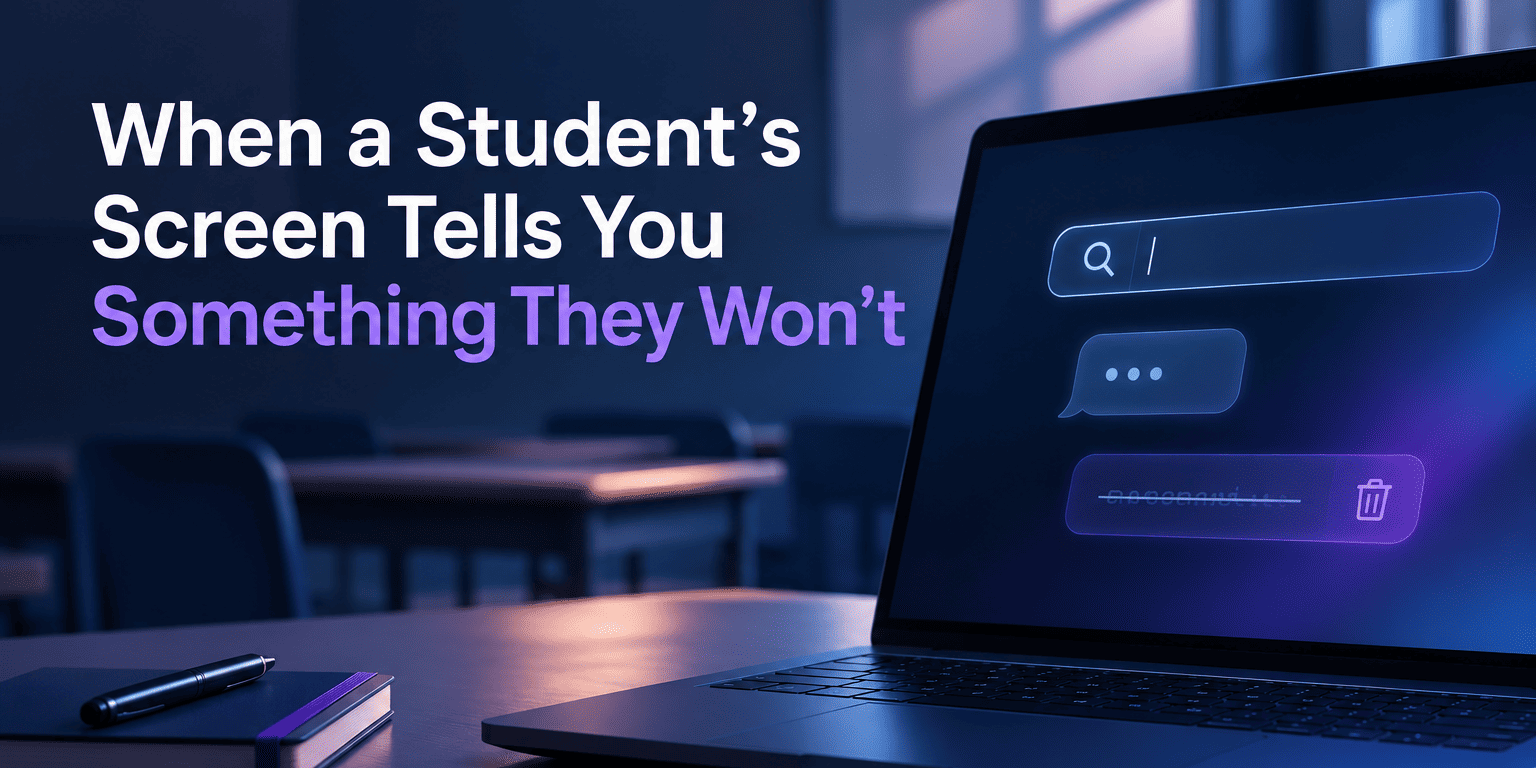
When a Student’s Screen Tells You Something They Won’t
Most schools know exactly what to do when a student reports a safeguarding concern. But what happens when the student never says anything? Consider a student who attends every lesson, completes their assignments and appears perfectly fine. Nothing in their behavior suggests that something might be wrong. Yet, on their school device, they may be searching for answers to questions they are too uncomfortable to ask, encountering harmful content or typing messages they never actually send. To a teacher, it’s another ordinary school day. To that student, it might be anything but.
The Safeguarding Gap Nobody Talks About
Schools invest considerable time and resources in student wellbeing. They establish safeguarding policies, train staff to recognize warning signs and create procedures for reporting concerns. These are essential measures. But they share one important limitation: they often depend on someone noticing that something is wrong. And students don't always make that easy. Bullying can happen without a teacher witnessing it. Emotional distress isn't always reflected in academic performance. A student struggling with a personal issue may continue behaving exactly as expected. Meanwhile, more and more of their daily experiences take place digitally. This creates an uncomfortable question for school leadership: How much of a student’s digital experience remains invisible until something serious happens? Having a safeguarding policy is one thing. Having the visibility to act on it is another.
What If the First Warning Sign isn’t Spoken?
A concerning online search or an unusual message doesn't automatically mean a student is at risk. Context matters, and professional judgement is essential. But dismissing digital activity simply because nobody has formally reported a problem means potentially valuable information may never reach the people equipped to assess it.
This is where solutions such as Senso Safeguard become particularly relevant.
By identifying potentially concerning activity on school-managed devices and providing the surrounding context, Senso helps safeguarding teams recognize situations that might otherwise remain unnoticed. A phrase typed and deleted, for example, may never become a conversation. But with the appropriate monitoring in place, it can still be brought to the attention of someone who knows how to assess its significance. The objective isn’t to treat every unusual interaction as an incident. It's to give safeguarding professionals a clearer picture, allowing them to distinguish between harmless activity and situations that may deserve closer attention. Because early intervention doesn’t always begin with a student asking for help. Sometimes, it begins with someone recognizing that help might be needed.
The Question Every School Should Be Asking
Digital safeguarding is no longer just about preventing access to inappropriate websites or responding to reported incidents. It’s also about understanding whether the school's existing approach can identify potential concerns early enough for staff to respond appropriately. Teachers cannot be everywhere. Students won’t always speak up. And even the most carefully designed safeguarding procedures have limitations when crucial warning signs remain unseen.
Technology cannot replace the relationships, trust and professional judgement that make effective safeguarding possible. But it can help ensure those strengths are supported by meaningful information.
Your school may already have excellent safeguarding procedures. The real question is whether those procedures are getting the opportunity to work.
Discover how Senso Safeguard can help your school strengthen its approach to digital safeguarding.
Contact Akeydor to learn more.