
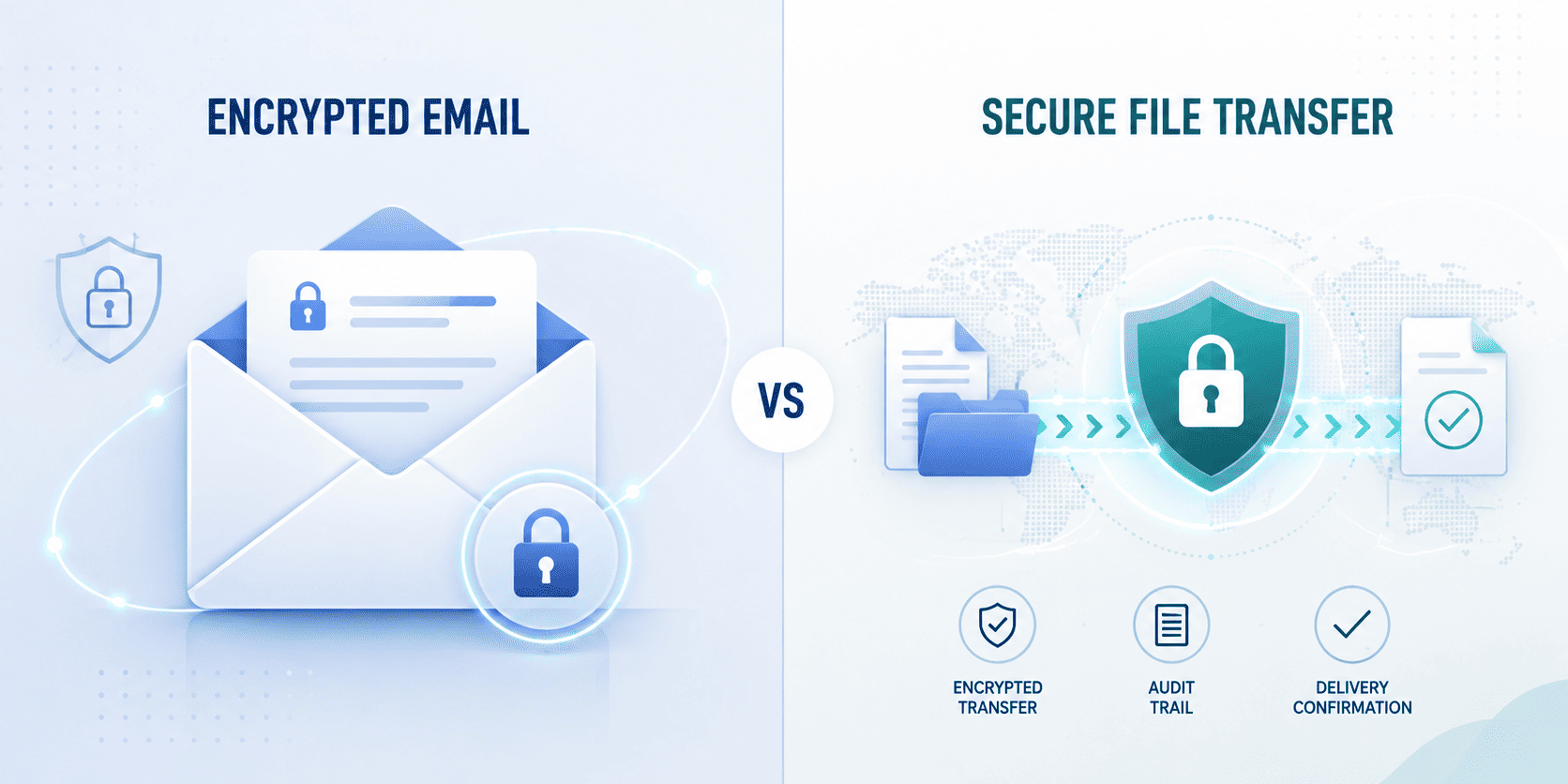
Secure File Transfer vs Encrypted Email: What’s the Difference and When Do You Need Each?
Sharing files is part of everyday business. Contracts, invoices, HR documents, customer data, financial information and technical reports move between people, departments, partners and customers every day.
The question is not whether your organisation shares sensitive information. The real question is: how
safely is that information being shared?
For many teams, email is still the default option. It is fast, familiar and convenient. But when sensitive information is involved, a standard email attachment is not always enough. That is where terms like “encrypted email” and “secure file transfer” start appearing. They may sound similar, but they are not exactly the same thing. Understanding the difference can help organisations choose the right method for the right situation.
What is encrypted email?
Encrypted email protects the content of an email message so that only the intended recipient can read it. Depending on the solution, encryption may apply to the body of the email, the attachments, or both. This is especially useful when the message itself contains sensitive information, such as personal data, confidential business details, internal decisions or financial information. Encrypted email is often a good fit when teams need secure communication in a familiar format. For example, a legal department may need to share confidential comments, HR may need to send employee-related information, or finance may need to discuss payment details securely. The key advantage is simplicity. People can continue working within their usual communication flow, while adding an extra layer of protection.
What is secure file transfer?
Secure file transfer focuses mainly on protecting the files being exchanged. Instead of attaching a sensitive document directly to a standard email, the file is transferred through a secure platform or protected delivery process. This often provides additional controls, such as recipient verification, download tracking, expiry dates, file size flexibility and audit logs. It is also better suited for large files that normal email systems may block or fail to deliver. This approach is useful when the file is the main asset that needs protection. Examples include customer records, technical drawings, medical files, contracts, financial documents, large reports or project data shared with external partners. Secure file transfer gives organisations more visibility and control over what was sent, who accessed it and when.
Which one should you use?
The best choice depends on what you are trying to protect. If the sensitive information is mainly inside the written message, encrypted email may be the right option. If the main concern is a document, file or dataset, secure file transfer is usually more appropriate. In some cases, both may be needed. For example, a company may need to send a confidential message and include sensitive attachments. Combining encrypted communication with secure file delivery can provide stronger protection.
Why choosing the right method matters
Using the wrong method can create unnecessary risk. A password-protected ZIP file sent by email may feel secure, but it can be hard to manage, difficult to audit and easy to misuse. Consumer file-sharing links may be convenient, but they may not offer the level of control required for business-critical or regulated information. For organisations dealing with GDPR, internal security policies, customer trust or industry compliance requirements, secure information exchange is not just an IT issue. It is part of responsible business operations.
The goal is not to make communication complicated. The goal is to make secure communication easy enough that people actually use it. When teams have simple, reliable ways to send sensitive information, they are less likely to rely on risky workarounds. That means fewer accidental exposures, better visibility and more confidence when working with customers, partners and colleagues.
In the end, both encrypted email and secure file transfer have their place. The important thing is knowing when to use each one — and making sure your people have secure options that fit naturally into the way they already work.